วันอาทิตย์ที่ 28 เมษายน พ.ศ. 2556

การฝึกอบรมหลักสูตร Weapons of Mass Destruction (WMD)-sensitive commodity identification training program


  การฝึกอบรมหลักสูตร Weapons of Mass Destruction (WMD)-sensitive commodity identification training program ระหว่างวันที่ 2 – 6 สิงหาคม 2553 ณ โรงแรมมณเฑียร พัทยา ดำเนินการโดยสถานทูตสหรัฐอเมริกาประจำประเทศไทย ร่วมกับ the US Department of Energy’s International Nonproliferation Export Control Program (INECP) และ the US Embassy in Bangkok’s Export Control and Related Border Security (EXBS) Program
WMD-Commodity Identification and Curriculum/ Instructor Training Workshop
US Department of Energy / International Nonproliferation Export Control Program (INECP)
August 2-6, 2010
Cattleya Room, the Montien Hotel Pattaya, Thailand

Day 1: 2 August
WMD Commodity Identification Training

Start

End
Topic

08:30
-
09:00
Registration of Attendees

09:00
-
09:30
Opening Remarks

09:30
-
09:45
Group Photo

09:45
-
10:15
Overview of Workshop

10:15
-
11:00
DPRK Weapon Smuggling Interdiction Success

11:00
-
12:00
Introduction to Commodity Identification Training

12:00
-
13:00
Lunch

13:00
-
13:30
Nuclear Weapon Development and Related Control Lists

13:30
-
14:15
Electronic Equipment

14:15
-
14:45
Fabricated Components & Metals Handbook

14:45
-
15:00
Break

15:00
-
15:30
Practical Exercise – examples (valve & frequency changers)

15:30
-
16:00
Missile Delivery Systems and Related Equipment

16:30
-

Q&A/Discussion/End of Day 1

Day 2: 3 August
WMD Commodity Identification Training
Start

End
Topic
9:00
-
9:45
Chemical Weapons Development and Related Industrial Equipment
9:45
-
10:30
WMD Chemicals and Practical Exercise
10:30
-
10:45
Break
10:45
-
11:45
Industrial Equipment (Nuclear/Missile)
11:45
-
12:15
Biological Weapons Development and Related Industrial Equipment
12:15
-
13:15
Lunch
13:15

13:45
Australia’s Export Control System
13:45
-
14:45
Electronic Components
14:45
-
15:00
Break
15:00
-
15:45
Missile Systems and Subsystems
15:45
-
16:30
Practical Exercise – Match Game
16:30
-

Q&A/Discussion/Closing Remarks

Day 3: 4 August
CIT Instructor Training, Implementation Experience and Curriculum Development
Start

End
Topic
9:00
-
9:30
Introduction to CIT Instructor Training
9:30
-
10:30
OAP Nuclear and Radiological Outreach Program: Development Experience and Lessons Learned
10:30
-
10:45
Break
10:45
-
11:30
CIT Implementation Experience in Partner Countries
  • Elements of a CIT Training Plan
  • Instructor Training
11:30

12:00
Export Controls of Ores and Concentrates
12:00
-
13:00
Lunch
13:00
-
14:30
CIT Training Tools
  • Practical Exercises
  • Handbooks
  • eCIT Demonstration
14:45
-
15:00
Break
15:00
-
16:30
CIT Training Tools
  • XRF Discussion
16:30
-

Q&A/Discussion


Day 4: 5 August
CIT Instructor Training, Implementation Experience and Curriculum Development
Start

End
Topic
9:00
-
10:00
CIT National Course Development
  • Sample Timeline for Course Development
  • Curriculum Development
  • Sample Agendas
10:00
-
10:45
Nuclear Technology Discussion
  • Nuclear Suppliers Group
    • Trigger List
10:45
-
11:00
Break
11:00
-
12:00
Nuclear Technology Discussion
  • Nuclear Suppliers Group
    • Dual-Use List
12:00
-
13:00
Lunch
13:00
-
14:00
Missile Technology Discussion
  • Missile Technology Control Regime
    • Category 1
    • Category 2
14:00
-
15:00
Chemical and Biological Technology Discussion
  • Chemical Weapons Convention
    • Scheduled Chemicals
  • Biological Weapons Convention
  • Australia Group
    • Listed Chemicals
    • Listed Equipment
    • Listed Agents
15:00
-
15:15
Break
15:15
-
16:00
Additional Protocol for Customs
16:00
-
16:30
Export Control and the Harmonized Tariff System
16:30
-

Q&A/Discussion
Day 5: 6 August
CIT Instructor Training, Implementation Experience and Curriculum Development
Start

End
Topic
9:00
-
9:30
Thailand Export Control Ways Ahead
9:30
-
10:30
Curriculum Development Exercises
  • CIT Module Development
  • Writing Speaker Notes
  • Peer Review
  • Practical Exercise Development
10:30
-
10:45
Break
10:45
-
12:00
Curriculum Development Exercises Reporting
12:00
-
13:00
Lunch
13:00
-
16:00
Q&A/Discussion/Path Forward


การฝึกอบรมครูฝึกว่าด้วยการป้องกันการก่อการร้ายที่ใช้อาวุธชีวภาพ


  การฝึกอบรมครูฝึกว่าด้วยการป้องกันการก่อการร้ายที่ใช้อาวุธชีวภาพ (INTERPOL Bioterrorism Train the Trainers session) ระหว่างวันที่ 18 – 22 กุมภาพันธ์ 2551 ณ ประเทศฟิลิปปินส์ โดยสำนักเลขาธิการองค์การตำรวจสากล
AGENDA FOR THE TRAIN THE TRAINERS SESSION IN PHILIPPINES

DAY 1 Prevention 09:00 – 09:15 Opening Session 
09:15 – 10:15 Course/Delegates introduction 
10:15 – 10:30 Terrorism and CBRN use 

10:30 -- 10:45 Discussions 
10:45 – 11:00 Coffee break 
11:00 –11:15 Deliberate Use of a Biological Agents and Toxins 
11:15 – 11:30 Discussions 
11:30 – 11:45 Bio Devices 
11:45 – 12:00 Discussions 
12:00 – 13:30 Lunch 
13:30 – 13:45 Risk/Threat Assessment 
13:45 – 14:00 Discussions 
14:00 – 14:15 Prevention – Public Health/LE 
14:15 -- 14:30 Discussions 
14:30 – 14:45 Prevention – Bio Security 
14:45 – 15:00 Discussions 
15:00 – 15:15 Preventing misuse of biological agents-BK 
15:15 – 15:30 Discussions 
15:30 – 16:00 Coffee Break 
16:00 – 17:30 Syndicate Group Work 
17:30 - 18:00 Day 1 final discussions 

DAY 2 Response
09:00 – 09:15 Review of the first day 
09:15 – 09:30 First Line of Defense 
09:30 – 09:45 Discussions 
09:45 – 10:00 Second Line of Defense 
10:00 – 10:15 Discussions 
10:15 – 10:30 Public Communication Issues 
10:30 – 10:45 Discussions 
10:45 – 11:00 Coffee Break 
11:00 – 11:15 Response – Law Enforcement 
11:15 – 11:30 Discussions 
11:30 – 11:45 Response – Public Health 
11:45 – 12:00 Discussions 
12:00 – 12:15 Legal basis for response 
12:15 – 12:30 Discussions 
12:30 – 13:00 Topic selection and group discussion with experts 
13:00 – 14:00 Lunch 
14:00 – 15:30 – Syndicate Group Work 
15:30 – 15:45 Coffee Break 
15:45 – 17:00 - Syndicate Group Work(cont) 
17:00 - 17:30 – Day 2 final discussions 

DAY 3 Legislation
09:00 – 09:15 Topic Introduction 
09:15 – 10.45 Legislation discussions 
10:45 – 11:00 Coffee Break 
11:00 – 13.00 Legislation discussions 
13:00 – 14:00 Lunch 
14:00 – 15:30 – Legislation discussions 
15:30 – 15:45 Coffee Break 
15:45 – 17:00 - Legislation discussions 
17:00 - 17:30 – Day 3 final discussions 

DAY 4: Exercise
09:00 – 12:00 Crime Scene Investigation 
  Bio agents Identification 
  Personal Protective Equipment 
  Crime Scene Examination 

Coffee Break Included 
12:00-13:00 – Lunch 
13:00 – 14:00 Travel to the Bio Lab 
14:15-17:00 Work Stations, Practical Learning 
17:00 – 18:00 Travel to the hotel 
DAY 5: Exercise 
08:15 - 09:30 Travel to the Bio Lab (TBC) 
09:30 – 12:00- Practical Exercise 
12:00-13:00 - Lunch 
13:00-16:00 Practical Exercise(cont) 
16:00-17:00 Final discussions and certificates handout 
17:00-18:00 Travel to the hotel 


วันศุกร์ที่ 1 มีนาคม พ.ศ. 2556

มาตรฐานสากลที่เกี่ยวข้องกับการตรวจวัดถังที่ใช้เป็นภาชนะรับผลิตภัณฑ์ปิโตรเลียมและของเหลวที่นำเข้ามาจากต่างประเทศ


    มาตรฐานสากลที่เกี่ยวข้องกับการตรวจวัดถังที่ใช้เป็นภาชนะรับผลิตภัณฑ์ปิโตรเลียมและของเหลวที่นำเข้ามาจากต่างประเทศนี้ ดร.สงบ สิทธิเดช ได้ทำการศึกษาและได้นำลงเผยแพร่ใน Sangobsite Google ตั้งแต่ June 20, 2011 ผู้เขียนเห็นว่าเป็นงานการศึกษาที่น่าสนใจจึงได้นำมาเผยแพร่ในบล็อกนี้

ถังในที่นี้หมายถึง ภาชนะรับผลิตภัณฑ์ปิโตรเลียมและของเหลวที่นำเข้ามาจากต่างประเทศในลักษณะ Bulk Cargo ได้แก่ ถังทรงกระบอกแนวตั้ง ถังทรงกระบอกแนวนอน และถังทรงลูกโลก เป็นต้น ทั้งนี้ตามประกาศกรมศุลกากร ที่ 128/2541 ข้อ 1 ได้กำหนดให้ ถังที่ผู้นำเข้าหรือเจ้าของถังมีความประสงค์จะใช้เป็นภาชนะรับผลิตภัณฑ์ปิโตรเลียมและของเหลวที่นำเข้าจากต่างประเทศในลักษณะ BULK CARGO จะต้องได้รับการตรวจสอบสภาพถังและรับรองตารางคำนวณปริมาตรความจุประจำถังจากกรมศุลกากร

มาตรฐานสากลที่เกี่ยวข้องกับการตรวจวัดถัง
ปัจจุบันมาตรฐานสากลที่เกี่ยวข้องกับการตรวจวัดถัง จากการศึกษาพบว่า ที่มีการอ้างถึงมากที่สุดได้แก่มาตรฐาน ISO, API, ASTM, EI (เทียบตามตารางแนบท้าย) สรุปได้ดังนี้
(1) API (American Petroleum Institute)[i] กำหนดคู่มือมาตรฐานการวัดปิโตรเลียม (MPMS: Manual of Petroleum Measurement Standards) และมาตรฐานวิธีการตรวจวัดและคำนวณ (STD:  Standard) ด้วยวิธีการต่างๆ ดังนี้
   (1.1) API MPMS 2.2A / API STD 2550: Measurement and Calibration of Upright Cylindrical Tanks by Manual Strapping Method เทียบเท่า ASTM D1220, EI HM2 และ ISO 7507-1
   (1.2) API MPMS 2.2B: Calibration of Upright Cylindrical Tanks using the Optical Reference Line Method เทียบเท่า ISO 7507-2
   (1.3) API MPMS 2.2C: Tank Calibration by Optical Triangulation Method เทียบเท่า ISO 7507-3
   (1.4) API MPMS 2.2D: Tank Calibration by Internal Electro-Optical Distance-Ranging Method เทียบเท่า ISO 7507-4 สำหรับวิธีการวัดโดยใช้กล้อง EODR นี้ ถือว่าเทคโนโลยีใหม่ที่พัฒนามาจากวิธีการที่ 1.3 และกำลังเป็นที่นิยมใช้งานกันอยู่ในขณะนี้ (อ้างจากบทความ New tank calibration method could be wave of the future[ii])
   (1.5) API MPMS 2.2E / API STD 2551: Petroleum and Liquid Petroleum Products - Calibration of Horizontal Cylindrical Tanks - Part 1: Manual Methods เทียบเท่า ASTM D1410 และ ISO 12917-1
   (1.6) API MPMS 2.2F: Petroleum and Liquid Petroleum Products - Calibration of Horizontal Cylindrical Tanks - Part 1: Manual Methods เทียบเท่า ISO 12917-2
   (1.7) API MPMS 2.2G / API STD 2555: Liquid Calibration of Tanks เทียบเท่า ASTM D1406 และ ISO 4269
   (1.8) API STD 2552 Measurement and Calibration of Spheres and Spheroids เทียบเท่า ASTM D1408
หมายเหตุ: ในบทความ Guidelines help select storage tank calibration method[iii]     ได้สรุปวิธีการวัดหลักๆ เป็น 4 วิธี คือ Manual strapping, Optical reference line, Optical triangulation และ Electro optical distance ranging ตามข้อแนะนำให้เลือกใช้วิธีใดวิธีหนึ่งหรือหลายวิธีร่วมกันขึ้นอยู่กับปัจจัยต่างๆ ของถังที่ทำการตรวจวัด ได้แก่ (1) Type of tank: floating or fixed roof (2) Operational constraints: entry or no entry (3) Insulation or no insulation (4) Riveted or welded (5) Other parameters such as number/size of wind girders
(2) ISO (International Organization for Standardization)[iv] อ้างถึง TC 28 - Petroleum products and lubricants ได้แก่ ISO 7507 1 – 4, ISO 12917-1, ISO 12917-1 และ ISO 4269
(3) ASTM (American Society for Testing and Materials) / ANSI (American National Standards Institute)[v] อ้างถึง D1410, D1406, D1408
(4) EI (The Energy Institute)[vi] อ้างถึง Hydrocarbon management ได้แก่ HM 2: Tank calibration. Section 1: Strapping, internal diameter and internal offset methods for the calibration of vertical cylindrical tanks (formerly PMM Part II, S1)

API - EI - ISO-ASTM Corresponding Standards List
API MPMS
API Title
API STD
EI
ISO
ASTM
2.2A
Measurement and Calibration of Upright Cylindrical Tanks by Manual Strapping Method
2550
HM 2
7507-1
 D1220
2.2B
Calibration of Upright Cylindrical Tanks using the Optical Reference Line Method


7507-2

2.2C
Tank Calibration by Optical Triangulation Method


7507-3

2.2D
Tank Calibration by Internal Electro-Optical Distance-Ranging Method


7507-4

ISO 7507-5: Petroleum and liquid petroleum products - Calibration of vertical cylindrical tanks - Part 5: External electro optical
7507-5
2.2E
Petroleum and Liquid Petroleum Products - Calibration of Horizontal Cylindrical Tanks - Part 1: Manual Methods 
2551

12917-1
D1410
2.2F
Petroleum and Liquid Petroleum Products - Calibration of Horizontal Cylindrical Tanks - Part 2: Internal Electro-Optical Distance-Ranging Method


12917-2

2.2G
Liquid Calibration of Tanks
 2555

 4269
 D1406

Measurement and Calibration of Spheres and Spheroids
2552


D1408


[i] http://www.api.org/,
http://en.wikipedia.org/wiki/American_Petroleum_Institute,
http://www.docstoc.com/docs/20276637/Manual-of-Petroleum-Measurement,
http://www.petrospection.com.au/WYNTK%20Tank%20Cal.htm
[ii] http://www.ogj.com/index/article-display/16352/articles/oil-gas-journal/volume-90/issue-42/in-this-issue/refining/new-tank-calibration-method-could-be-wave-of-the-future.html
[iii] http://www.ogj.com/index/article-display/18379/articles/oil-gas-journal/volume-88/issue-6/in-this-issue/refining/guidelines-help-select-storage-tank-calibration-method.html (online: 03.11.10)
[iv] http://www.iso.org/iso/home.html,
http://www.iso.org/iso/iso_catalogue/catalogue_ics.html,
http://www.iso.org/iso/iso_catalogue/catalogue_tc.html
[v] http://www.astm.org/index.shtml,
http://global.ihs.com/news/temp/standards/ASTM-17.html
[vi] http://www.energyinst.org/home,

วันจันทร์ที่ 18 กุมภาพันธ์ พ.ศ. 2556

Multilateral Export Control Regimes (ECR)


Multilateral Export Control Regimes (ECR) หมายถึง กลุ่มประเทศในภูมิภาคต่างๆ ที่ออกกฎระเบียบควบคุมสินค้าที่อาจใช้ประโยชน์ได้สองทาง (ตามแผนภูมิภาพข้างล่าง) ในบทความต่อไปนี้จะเป็นการศึกษาลงลึกในแต่ละกลุ่มประเทศว่ามีประเทศอะไรบ้าง มีกลุ่มสินค้าอะไรที่อยู่ข่ายควบคุมการนำเข้าและส่งออกในประเทศนั้น ๆ ซึ่งจะเป็นประโยชน์อย่างมากกับผู้ประกอบการค้าไทยที่จำเป็นจะต้องรู้กฎระเบียบข้อห้ามข้อจำกัดก่อน ที่ท่านจะส่งสินค้าเข้าไปขายยังประเทศ นั้นๆ


Dr.Sangob Sittidech
Copyright, Update May 4, 2013

วันจันทร์ที่ 16 กรกฎาคม พ.ศ. 2555

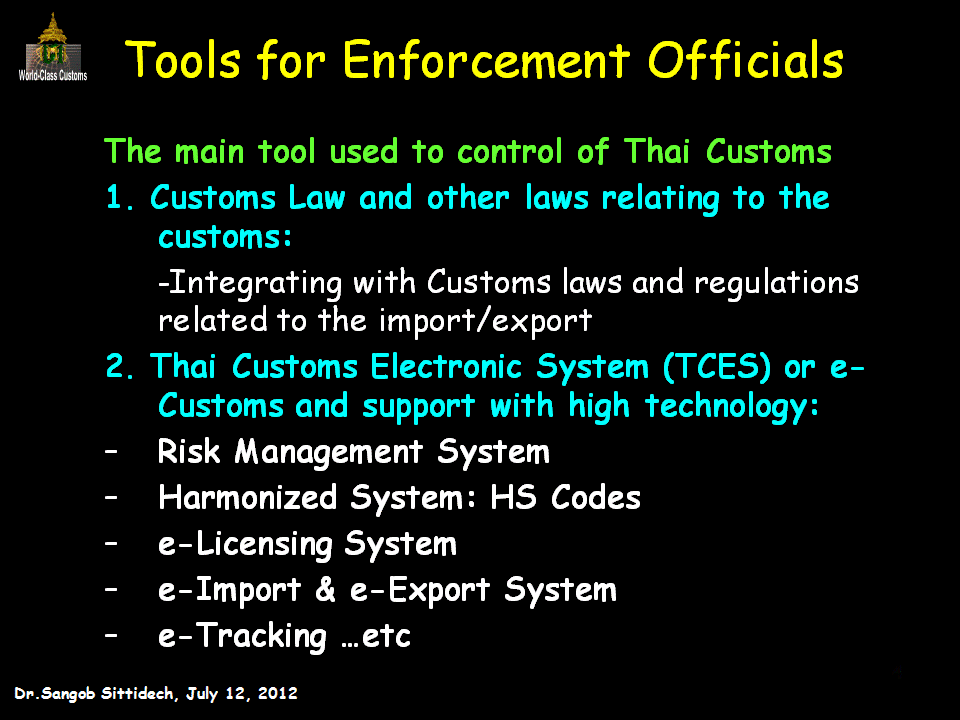
Strategic Goods Awareness and Tools for Enforcement Officials


Asia-Pacific Strategic Trade Experts Network (STEN)
July 11-12, 2012
Sarocha meeting Room, Siam Kempinski Hotel, Bangkok

            Strategic Goods Awareness and Tools for Enforcement Officials Effective enforcement of STCs requires that enforcement officials are aware of what strategic goods are subject to control. Armed with this knowledge, they also need tools and resources to support enforcement actions on shipments that may contain controlled items. This session will provide participants an opportunity to share experiences in supporting the enforcement function of STCs.

0900–1045            Regional Experience Sharing 
Strategic Goods Awareness and Tools for
 Enforcement Officials: Thai Experience Sharing
by Dr. Sangob Sittidech, Royal Thai Customs


 Copy Right by Dr.Sangob Sittidech
July 16, 2012


สารบัญรวมบทความทั้งหมด

ที่ดินบ้านสวน 1 งาน ท่ามกลางธรรมชาติในโครงการโกลเด้นโฮมเชียงแสนฯ ผ่อนสบาย ๆ เดือนละหมื่นกว่าบาท 24 เดือน ได้เป็นเจ้าของทันที   สนใจติ...